Chapter One: The Cape
The Cape of Good Hope was named by optimists.
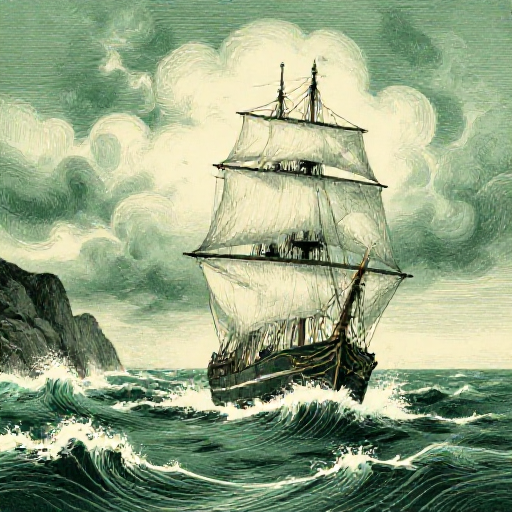
Sailors knew it differently. A place where the Atlantic and the Indian Ocean press against each other from opposite directions, where the water piles up in walls and the wind does not stop. Where ships go sideways and men drown within sight of land.
The Portuguese rounded it first in 1488. They lost ships doing it. Everyone who came after them lost ships too.
By the 17th century, the Cape had a reputation that no amount of renaming could improve. Sailors made offerings before the approach. They lowered their voices when they spoke of it. Some refused to speak of it at all.
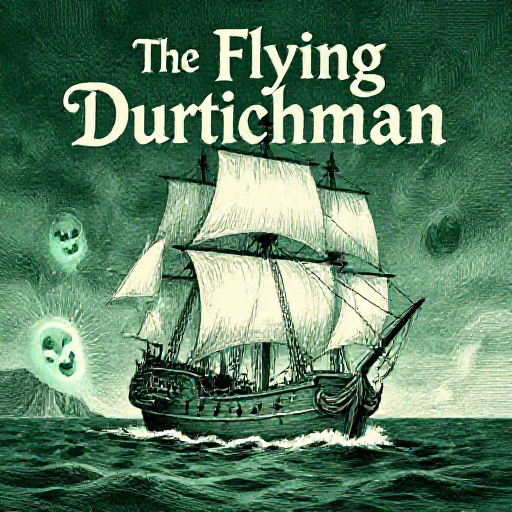
A Dutch captain named Hendrik van der Decken sailed toward it in a storm in 1680 and did not lower his voice.
Chapter Two: The Oath
The storm met him three days out from the Cape. The crew wanted to turn back. The first mate said the ship would not survive the passage.
Van der Decken was not interested in survival on those terms.
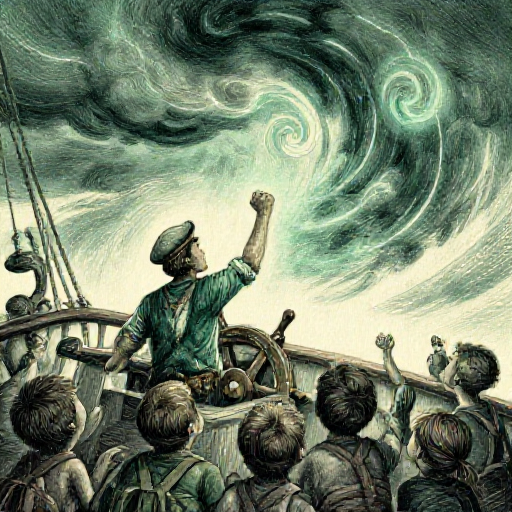
He ordered the course held. He nailed the helmsman's hands to the wheel when the man tried to turn it. He shot the first mate and threw him over the side.
Then, into the wind, which was by now loud enough to drown a man's voice, he made an oath. He would round the Cape if he had to sail until Judgment Day. He would not be stopped by God or Devil or storm.
Someone was listening.
The Devil, some say. God himself, say others, taking the offer. In any case, the oath was accepted.
Van der Decken got his wish exactly.
Chapter Three: The Crew
The men who sailed with him that day did not agree to the oath.
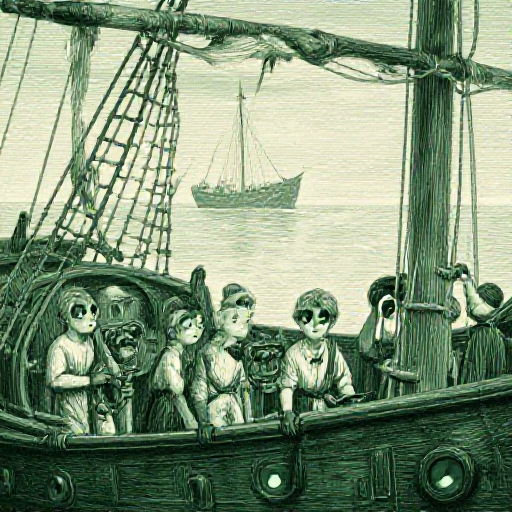
This is the part of the story that does not get told as often: they had no say in it. The captain made his bargain and the crew was included in the terms without being asked. They sail with him still. They work the ship. They do not age. They do not die. They cannot leave.
Sailors who have come close to the Dutchman report seeing figures at the rail. Men going about their work with the mechanical efficiency of those who have done the same task for three hundred years and long ago stopped thinking about it.
They do not wave. They do not call out. They watch the passing ship with expressions that witnesses have described, consistently, as neither hope nor despair. Something past both.
Endurance with no destination is its own kind of hell.
Chapter Four: The Omen
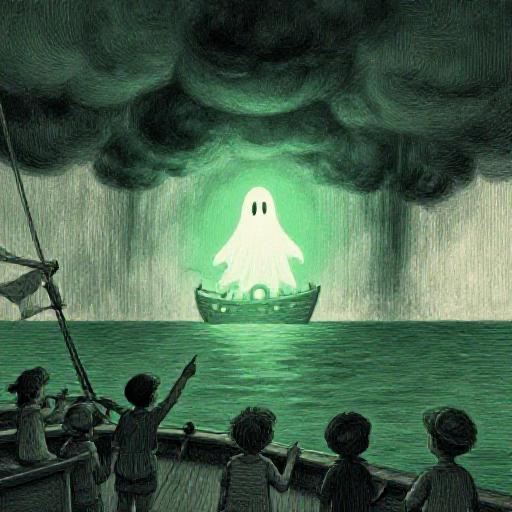
The Flying Dutchman appears before storms.
When the sky is turning and the barometric pressure is dropping and the sea is starting to build, sometimes a ship appears on the horizon that does not appear on any chart. Sailing directly into the weather. Moving too fast for the wind. Lit from within, some say, on nights when no lantern could burn in that wind.
It does not avoid the weather. It sails into it. It has been sailing into the same storm for three hundred and fifty years.
Old sailors knew what it meant. New sailors would be told by the old ones: if you see her, shorten sail and pray. The storm that killed the Dutchman is the storm that's coming for you.
Of all the ghost ships ever reported, no other has been sighted so consistently, by so many independent witnesses, over so long a span of time.
Chapter Five: The Seven Years
There is a mercy in the curse, if you can call it that.
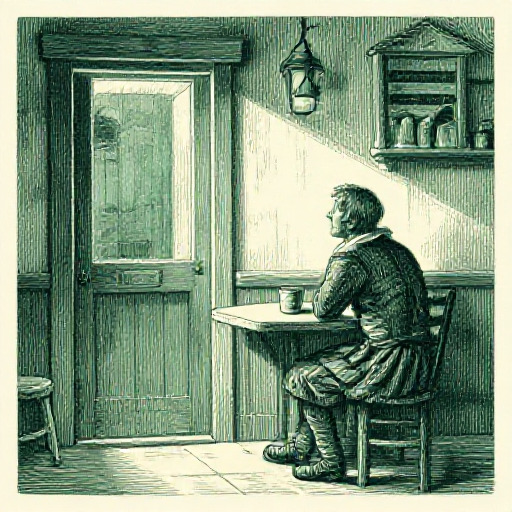
Every seven years, the ship is allowed to anchor. Van der Decken is permitted to come ashore for a single night. He is looking for a woman who will love him faithfully until death, and through that faithfulness, break the oath.
He has been coming ashore for three hundred and fifty years.
He sits in port taverns and speaks to no one, or speaks quietly to one person, and then returns to the ship before dawn. No woman has agreed to his terms, or none who agreed has held to them. The sailors who have spoken with him describe a man who is tired in a way that sleep cannot fix.
He does not ask for pity. He is not looking for pity.
He is looking for one person. He has seven years before he must return to the sea.
He keeps looking.
Chapter Six: The Last Sighting
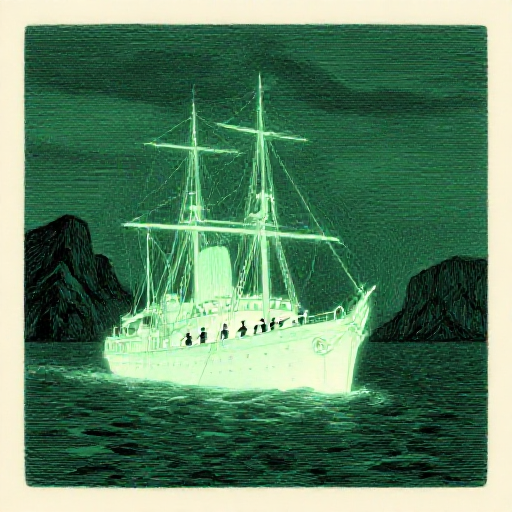
The most recent confirmed sighting in the record is from 1942. A South African admiral named Nagel, stationed near the Cape, reported a strange vessel on the horizon during a night watch. It was visible for several minutes and then was not.
The British Royal Family has a sighting on record from 1881. Prince George, later King George V, was a midshipman aboard HMS Bacchante when the ship's log recorded a luminous vessel off the port bow near the Cape. Thirteen men saw it. The officer who first reported it fell from the rigging and died before the day was out.
The storm came three hours after the sighting.
The Dutchman has been sailing for a very long time. The Cape has not gotten any kinder. Van der Decken rounds it again and again, every pass identical to the first, in a storm that never ends and never kills him.
He will keep his oath. He has no choice now.
He made sure of that himself.
The True History
The legend of the Flying Dutchman appears in European maritime folklore as early as the late 17th century and is most strongly associated with the Cape of Good Hope trade routes. The earliest written accounts describe a Dutch captain who swore a blasphemous oath and was condemned to sail forever as punishment. The captain's name varies across sources: van der Decken, van Straaten, and Falkenberg all appear in different traditions. The specific detail of the nailed helmsman and murdered first mate is not present in all versions, but the core of the oath and the eternal sailing is consistent.
The 1881 sighting by HMS Bacchante is documented in the ship's official log and was published in an 1893 memoir by the Duke of Clarence. Prince George, who later became King George V, corroborated the account. The logbook entry is among the most widely cited paranormal maritime records in existence. The death of the lookout following the sighting is noted in the same records.
Richard Wagner wrote an opera based on the legend in 1843, which introduced the redemption arc: the captain can be freed by a faithful woman's love. This element may be an invention of the 19th-century romantic tradition rather than an original part of the folklore, but it is now so embedded in the story that separating it is nearly impossible. Whether Van der Decken is looking for rescue or simply condemned to look for it forever depends on which version you believe.