The Knocking That Wasn't a Branch
Okay. So. Tennessee. 1817.
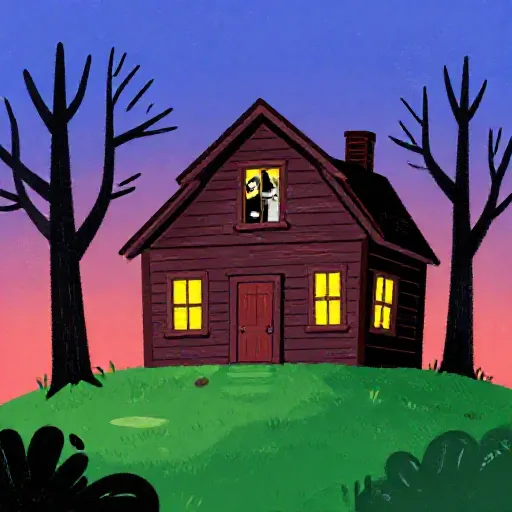
There is a family called the Bells, and they live on a farm near the Red River settlement in Robertson County, which later became the town of Adams. This is the kind of place where you have so much land your nearest neighbor is a fifteen-minute walk through the woods. Very pastoral. Very we-churn-our-own-butter-and-know-the-Lord. John Bell is a farmer and a member of the local Baptist congregation. His wife Lucy is running the entire operation: a big house, a working farm, and a stack of children, though the two who matter most to this story are a daughter named Betsy and a small son named Richard, who will spend the rest of his life half-remembering all of it. The Bells are doing fine. They are aggressively fine.
In the family's own telling, it does not start with a noise. It starts with an animal. One evening John Bell is walking the edge of a cornfield and there is a thing sitting between the rows, built roughly like a dog but not a dog, watching him. He raises his gun and fires. It is gone. No body, no tracks, nothing. Around the same time others in the household report a strange oversized bird lifting off a fence rail, too big to be any bird they know. Frontier Tennessee had wolves and panthers and bobcats, and John Bell could name every one of them on sight. This was none of them.
Then one night, after the candles go out, something knocks on the outside wall.
Three knocks. Evenly spaced. Very polite, actually. Like a neighbor stopping by to borrow a cup of flour, except it is midnight and the nearest neighbor is, again, a fifteen-minute walk through the trees. In the dark. In 1817, when the trees were not messing around.
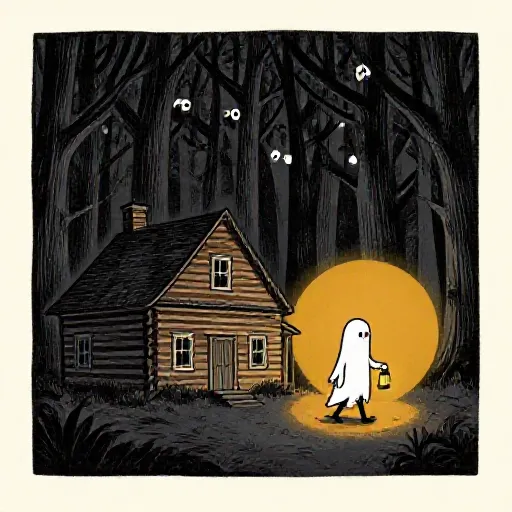
John grabs a lantern and does the whole perimeter check. Every board, every shadow, every suspicious raccoon. Nothing. Just the dark being dark, which, fine. He goes back inside and sets the lantern down.
The knocking starts again. From inside the walls this time.
Cool. Great. Love that for him.
It settles into a slow scraping, like a fingernail dragged across the back of the plaster in one long deliberate line. Not fast. Not panicked. Slow. Like whatever is doing it has nowhere else to be and all the nights in the world to do it.
And here is the part that really gets me, and it comes straight out of Richard Bell's own manuscript years later: the children heard it first. By the family's account the Bell kids lay in their beds and listened to this thing for days, maybe weeks, before anyone told the parents. Days. There is something scratching inside my wall at night, followed by, anyway, what is for breakfast. Kids in 1817 were built different. Or broken different. I honestly cannot tell.
The Sheets Situation
So the knocking continues, and the Bells do what any God-fearing frontier family does when confronted with the inexplicable: they ignore it. For weeks. Because they are sensible people. John is a churchgoing farmer. Lucy has raised a houseful of children and does not have the bandwidth for paranormal activity. Ghosts are not on the chore wheel.
Then the bedsheets start moving.
I need you to understand: not falling off the bed. Not bunching up the way they do when you sleep weird. Moving. Being pulled. Slowly. One corner at a time, with this fussy, deliberate patience, like someone folding laundry in the middle of the night. Whatever was doing this had nowhere to be and an extremely specific interest in linen.
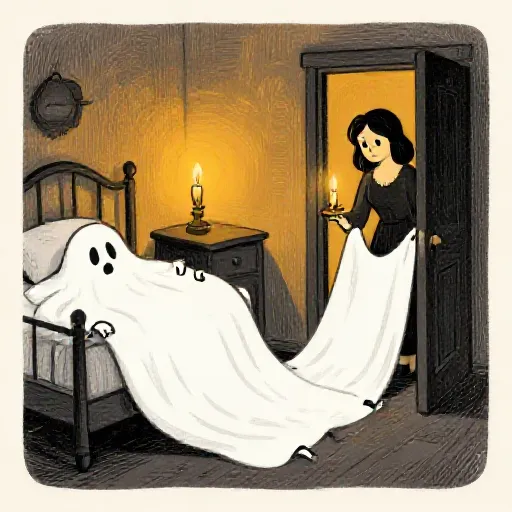
One night Lucy stands in the doorway with a candle and watches it happen in real time. The quilt is being reeled in, inch by inch. The fabric goes taut, then slack, then taut again. The candlelight makes the shadows breathe, and the whole room looks alive, and something under or inside or somehow part of the bed is taking the blankets with the quiet confidence of a thing that has never once been interrupted.
And Lucy Bell does not scream. She walks to the bed. She tucks the sheets back in. Firm corners. Smooths the wool flat with both hands. Done. Back to bed.
That is the toughest person in this story, by the way. Not the general. Not the reverend. Lucy Bell, re-making a bed that something invisible just unmade, at two in the morning, by candlelight. That is the energy I aspire to and will never achieve.
Morning comes and she tells John. Now here is the thing that makes the Bell case unusual, and it is a documented feature of the story: John does not keep it quiet. He goes to a neighbor he trusts, a devout man named James Johnston, and asks him to come sit in the house and see for himself. Johnston does. He brings his wife, prays over the room, calls the thing out in the name of scripture, and gets his own bedclothes yanked clean off him for the trouble. From that point on the haunting has witnesses from outside the family, which is exactly why the story survived.
When your linens develop a personality, a trusted neighbor is a reasonable first call. You are not phoning a plumber for this. There is no Yelp category for this.
It Talks Now. Great.
The year is 1818 and the thing in the walls has leveled up. It can talk now.
I want to be clear: this is not an improvement. At no point did anyone in the Bell household say, you know what would make the wall-scratching entity better? Language skills. But here we are.
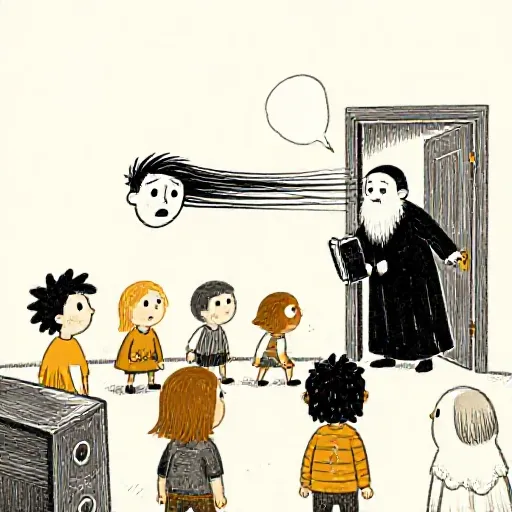
It starts as whispers. Little fragments of scripture coming from no particular direction, like someone is reading the Bible in the next room with the door cracked. Comforting, in theory. Scripture leaking out of your plaster at three in the morning is the opposite of comforting. That is anti-comfort. That is negative comfort.
Then the whisper becomes a voice. A woman's voice, by every account, with a strange doubled quality, like two people saying the same thing slightly out of sync. It knows things. It knows things it has no business knowing. It names visitors before they knock. It repeats private conversations word for word, pauses in the right places. In the family's telling it once recited, line for line, two sermons preached the same morning in two different Baptist meetings miles apart, complete with each preacher's cadence and voice. People start calling it Kate. The name sticks, and local tradition later ties it to a living neighbor, a woman named Kate Batts, though the entity itself gave a dozen different stories about who or what it was.
This thing has range. This thing has Wi-Fi before Wi-Fi.
Now here is where it gets, I do not even have the word. Interesting? Horrible? Horribly interesting?
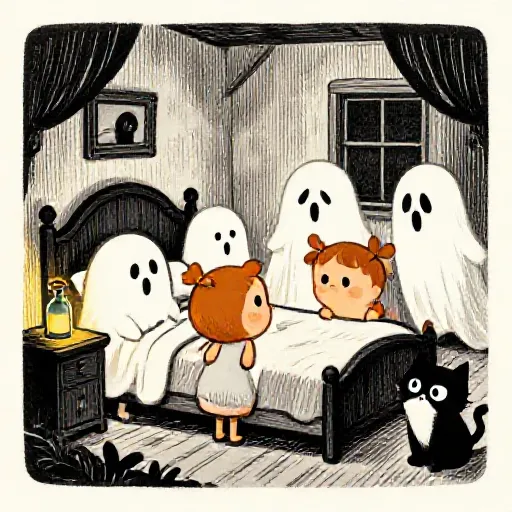
It loves Lucy. Loves her. When Lucy falls ill, the voice reportedly drops hazelnuts and fruit onto her bed and sings her hymns in a gentle alto. It is, functionally, her biggest fan. If it had hands it would be holding a lighter at her concert.
John, on the other hand, gets slapped.
Slapped. Across the face. In front of witnesses. The full sound of a palm on skin and no palm attached to anything. At night it pulls his hair and jerks his head across the pillow while Lucy lies right there, watching, able to do exactly nothing.
So to recap: the disembodied voice living in a Tennessee farmhouse has picked a favorite family member and a least favorite family member, and it is not being subtle about either. It has opinions. It has preferences. It has, God help us, a personality. It is a terrible roommate who does not pay rent and cannot be evicted, because you cannot evict something that does not have a body.
Andrew Jackson Nopes Out
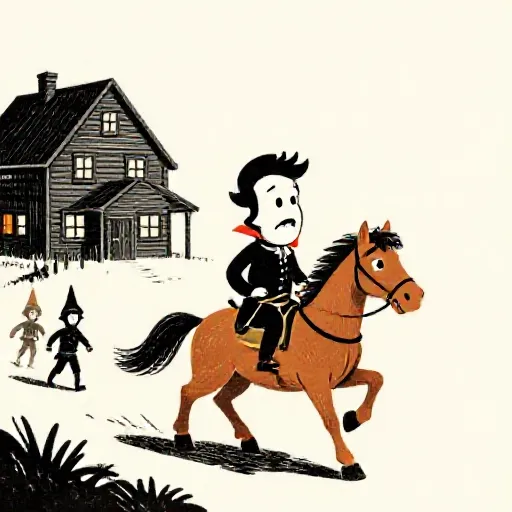
Okay, so word gets around. Obviously. A haunted farm in Tennessee where the ghost talks and keeps a favorites list is not the kind of thing that stays local. This is 1819 gossip gold. And the story goes that the news reaches Andrew Jackson, who at this point lives at the Hermitage outside Nashville, roughly a day's ride south.
Andrew Jackson. Future president. War hero. A man who really did walk around for years with a lead ball lodged near his heart, from a duel he won by letting the other guy shoot first. That kind of guy.
As the legend has it, he rides out toward Robertson County with a group of men, fully intending to prove the whole thing is a hoax. This is very on brand. Jackson's approach to most problems was bring men, bring guns, and stare at it until it quits.
He makes it to the property line.
The wagon locks up. On flat, dry ground. The wheels will not turn. The horses plant their hooves, start shaking, will not move, eyes rolling white. Then the men hear a voice out of the trees. Laughing. Where there is no one.
One man in the party, who had reportedly talked a big game about knowing how to deal with witches, gets knocked flat by something invisible, on his back in the dirt in front of everyone. Day one. That is a career-ending afternoon for a professional witch handler. That is your review going to one star in real time.
In the story, Jackson leaves the next morning. Before breakfast. Before eggs. And the line that has followed him for two hundred years is that he later said he would rather fight the entire British Army again than spend another night with the Bell Witch.
Whether any of that actually happened is its own question, and we get to it a few chapters down, because it deserves a straight answer. But the reason the line stuck is that everyone who repeated it had also heard the other stories, and they believed it. When Andrew Jackson says a place is too much, you take that place off your map.
The Cat Thing
I am going to be honest with you. This chapter is not fun. The others were fun-scary. This one is just scary. And sad. And weird. And it involves a cat in a way that, well, you will see.
Autumn 1820. John Bell starts to fail. His face and jaw seize up. His tongue swells so badly he cannot eat for stretches at a time, and he sits at the table watching his family have dinner while his own mouth will not open. He gets thin. His hands shake. This is a man who signed deeds and church papers his whole adult life, and now he cannot manage his own name. Whatever this thing is, it is taking him apart on purpose, and it is choosing which pieces to take.
The doctor comes out and does the doctor things: presses the jaw, listens to the chest, makes a face. He cannot name it. What is he going to write down? You are being murdered by a voice? They did not have a pamphlet for that.
The voice, meanwhile, is having the time of its life. It laughs at him. Slow, satisfied laughter, the kind where you can hear the smile in it. It whispers to him in the dark while his jaw is locked and he cannot answer back. It tells him he is going to die. Not as a threat. As a schedule.
December 20, 1820. John Bell does not wake up.
Beside the bed is a small dark bottle no one recognizes. The family said his usual medicine had been swapped for something else. According to the account, the voice pipes right up, cheerful as anything, and announces that it put the stuff there and gave John a dose while he slept. Volunteers the whole thing. Like a sommelier describing the specials.
Someone puts a single drop on the tongue of the family cat, just to see.
The cat dies. One seizure. Under a minute, by the telling. Done.
They throw the bottle into the fire and do not test it further. I have never agreed with a decision more in my life. You gave it to the cat. The cat filed its review. Burn the bottle.
John Bell is buried on the farm, and the account says the voice sings at the funeral. Clear and sweet, a hymn everyone knew, ringing out over a cold December field with no singer anywhere in sight. It was, and I cannot believe I am typing this, in a great mood. It sang at the funeral of the man it killed like it had been booked for a wedding.
I told you this chapter was not fun.
See You in Seven
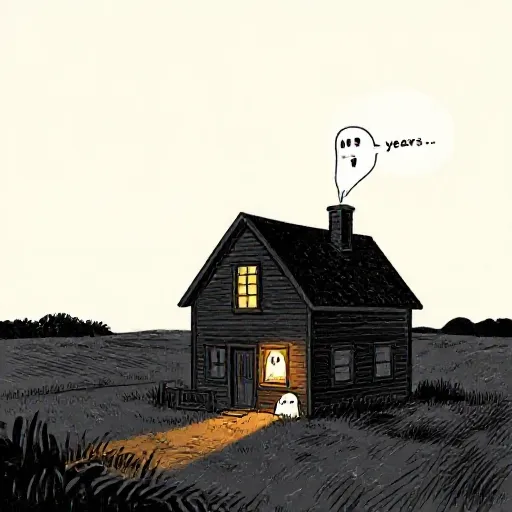
Spring 1821. The voice tells Lucy it is leaving.
First good news in four years. Four years of knocking, whispering, stolen sheets, invisible slapping, a dead cat, and a dead patriarch. The Bell family is so ready for this.
But, and there is always a but, it says it is coming back. In seven years. It says this casually. Like see you at Thanksgiving. Like it already has the date.
1828. Seven years later. The account says it does come back, briefly, and spends about two weeks talking with John Bell Jr., the eldest son, about history and religion and the future of the country, the way you would with a strange houseguest who went away and came back with opinions. Then it leaves again, and this time it says it will return in one hundred and seven years.
One hundred and seven. That is a weirdly specific number. That is not a round number. That is the number of someone who has done the math.
The 1930s. Right around when that clock would run out, a descendant named Charles Bailey Bell put the whole thing into a book, 'The Bell Witch: A Mysterious Spirit,' published in 1934, and fixed the story in print for good. It is worth saying plainly: almost everything we know traces to a small handful of books like his, all written long after the fact, and none of it to a diary or a newspaper from 1817. The story is old and consistent, but the paper trail is thin, and honest telling admits that.
Nobody has ever fully explained the Bell Witch. Not in a way that accounts for every witness and every retelling. There are a lot of them, and the accounts are stubbornly consistent, and most of them came from sober, churchgoing people with nothing obvious to gain. This is not a story about one person seeing something in the dark. It is a story about a whole community watching something for four years and, eventually, writing it down. If Borley Rectory is England's most-written-about haunting, the Bell Witch is the closest thing America has to an answer.
The farm is still there. Adams, Tennessee. The cave on the property draws thousands of visitors a year. The locals say it goes quiet out there on certain nights. Not normal quiet. Not country-road-after-dark quiet. A different quiet. A listening quiet. The kind where the air feels like it is paying attention.
But hey. Probably nothing. Probably just the wind. Probably just an old place doing old-place things.
Probably not a voice in the walls that keeps its promises and carries a hundred-and-seven-year planner.
Probably.
Sleep tight.
Did Andrew Jackson Actually Come Here?
Here is the question that brings a lot of people to this story in the first place: did Andrew Jackson really go to the Bell farm, and did the Bell Witch really run off a future president of the United States?
The honest answer is, probably not the way the story tells it, and possibly not at all.
Here is what we can actually say. Jackson was a real Tennessean who really did live within a day's ride, at the Hermitage outside Nashville, so a trip up to Robertson County was not physically far-fetched. He would go on to win the presidency in 1828, which is part of why the story has legs: it is a great haunting attaching itself to a genuinely famous name. And the tale of his visit is old. It shows up in the main written source for the entire haunting, Martin Van Buren Ingram's 'An Authenticated History of the Bell Witch,' published in 1894, which pulled together local memory and the manuscript attributed to the Bells' son Richard.
Here is the problem. Ingram's book came out more than seventy years after the events, and Jackson himself never wrote a word about the Bell Witch that anyone has ever found. There is no letter, no diary line, no account from any of the armed companions who supposedly rode out with him. The famous quote, that he would rather fight the whole British Army than face the Bell Witch again, has been repeated so many times it feels like bedrock, but it traces back to that same late retelling and no further.
So the responsible way to hold it is this. The Jackson visit is folklore, not documented history. It is one of the oldest and best-loved threads in the legend, and it may well sit on top of some real kernel of a visit, but you will not find it in Jackson's papers or in a newspaper from the time. Treat it as a great story that the county has been telling on itself for two centuries, because that is exactly what it is.
Which, honestly, does not make it less fun. It just means the scariest thing Andrew Jackson ever met might have been the retelling.
Where Is the Bell Witch Farm Today?
If you want to stand where this happened, you can. Sort of.
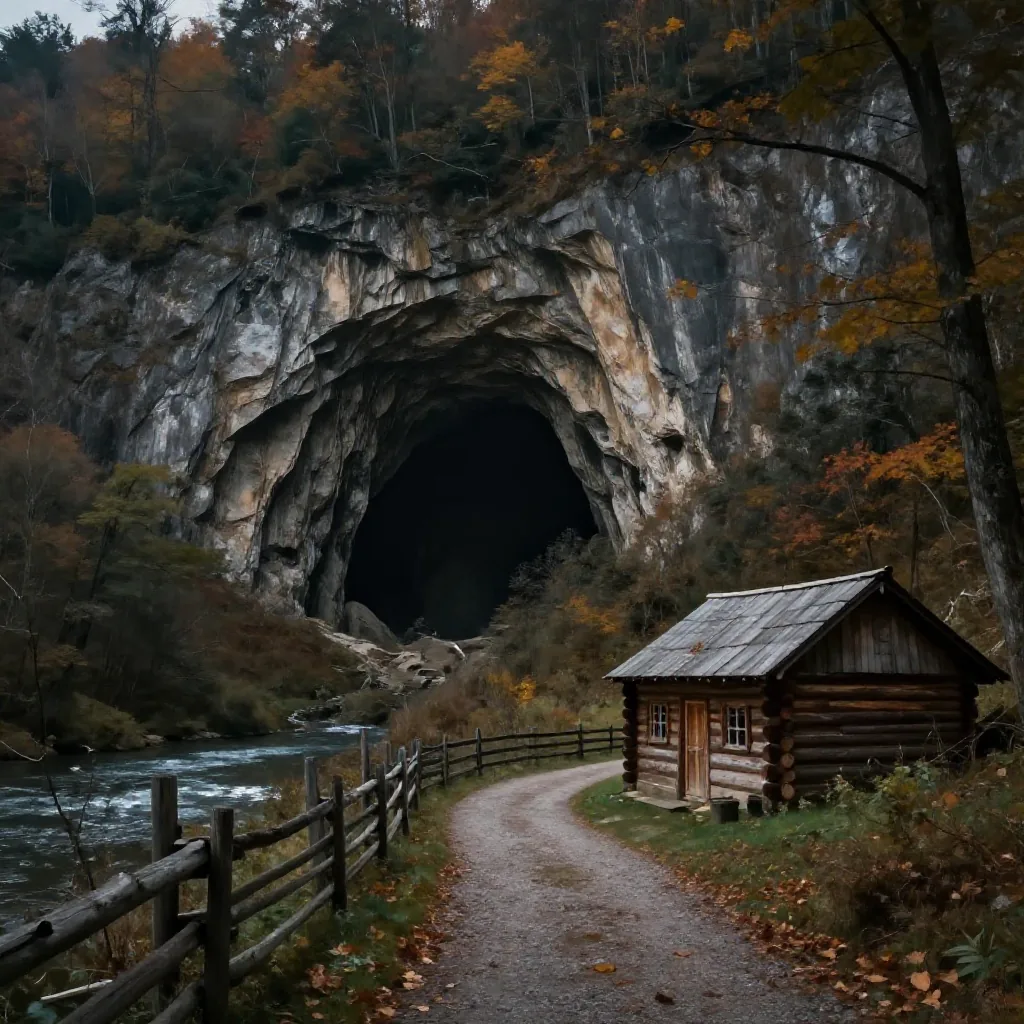
The Bell farm was near what is now Adams, Tennessee, a small town in Robertson County up toward the Kentucky line, roughly forty miles northwest of Nashville. In the Bells' day the settlement was called Red River. The original farmhouse is long gone, but the land is real, and people still live and farm around it.
The main draw is the Bell Witch Cave, a cave on the former Bell property along the Red River. It is privately owned and runs guided tours, mostly in the warmer months and heavily around Halloween, when the whole town leans into it. Near the cave sits a reconstructed log cabin built to resemble the sort of house the Bells lived in. None of it is a theme park. It is a working piece of rural Tennessee that happens to carry the most famous ghost story in the state.
There is also a Tennessee historical marker for the story, so the state has, in its dry roadside-plaque way, officially acknowledged that this is the place where the thing supposedly happened. Adams keeps the legend alive with local events, including an annual fall festival built around the tale, and the cave and cabin are the anchor for anyone making the trip.
A fair warning if you go: it is a real small town, not an attraction that runs on your schedule, so hours are seasonal and you should check before you drive. And whatever you believe walked those woods in 1817, the quiet out there is genuinely worth the trip. Bring a jacket. Do not wander off the path. And if you hear three knocks and there is no one at the door, well. You were warned two hundred years early.

What Became of Betsy Bell
There is one Bell the story tends to leave stranded, and she is the one it treated worst.
In the accounts, the entity saved its meanest attention for the daughter, Elizabeth Bell, called Betsy. Born in 1806, she was a young teenager when it started. The voice slapped her, pulled her hair, stuck pins in her, mocked her in front of company, and above all it went after her engagement to a local young man named Joshua Gardner. It would not let the match alone. It reportedly begged, screamed, and threatened until, by the telling, Betsy finally broke the engagement off. A haunting with a specific romantic agenda is a strange and unsettling thing, and this one had one.
So here is where the documented history and the legend part ways, and it is worth knowing the real ending, because it is stranger than the ghost.
The real Betsy Bell grew up, and in 1824 she married Richard Powell. Powell was her former schoolteacher, a real and educated man who later held public office in the county. She did not stay in Adams forever. She moved on, eventually to Mississippi, raised a family, lived into her eighties, and died in 1888. That is a full ordinary life, the kind the woods did not get to keep. Whatever tormented her childhood, it did not follow her to the end.
And that marriage is exactly why some people have never quite bought the ghost. Over the years skeptics and folklorists have floated the theory that Richard Powell, the schoolteacher who wanted Betsy, is the most convenient suspect in the whole affair: a clever, motivated adult, close to the family, who happened to end up married to the girl once her other engagement was destroyed. Some versions of that theory reach for ventriloquism, others for plain manipulation. I want to be careful here, because it is a theory and nothing more. There is no confession, no proof, no contemporary evidence that Powell did anything of the kind. It is a guess that fits the shape of the outcome, which is not the same as being true.
Which is really the whole Bell Witch in one knot. A community of sober people swore to what they saw. The paper trail is thin and late. The neatest natural explanation rests on no evidence either. Two hundred years on, you are left with the same three doors everyone else is left with: something was out there, someone was doing it, or the story grew in the retelling until it grew teeth.
Betsy, at least, got out. She married her teacher, she left the farm, and she died an old woman a long way from that cold December field. Of everyone in this story, she is the one who got to write her own last chapter. I hope it was a quiet one.
The True History
The part where we tell you what actually happened.
The Bell Witch legend is set on the John and Lucy Bell farm near Adams (then called Red River), Robertson County, Tennessee, about forty miles northwest of Nashville. The reported events span roughly 1817 to 1821, and John Bell died on December 20, 1820. The site today includes the privately owned Bell Witch Cave and a reconstructed log cabin.
The detailed narrative comes mainly from Martin Van Buren Ingram's 'An Authenticated History of the Bell Witch' (1894), from a manuscript attributed to the Bells' son Richard Williams Bell titled 'Our Family Trouble' (reportedly written around 1846), and from Charles Bailey Bell's 'The Bell Witch: A Mysterious Spirit' (1934). All three postdate the events by decades, so contemporary documentation from 1817 to 1821 is sparse.
The entity became known as 'Kate,' a name local tradition later tied to a living neighbor, Kate Batts. In the accounts it claimed shifting identities and displayed uncanny knowledge, repeating distant conversations and sermons word for word.
The story of Andrew Jackson's visit, and his line about preferring to fight the entire British Army again rather than face the Bell Witch, appears in Ingram's 1894 account and later retellings. No contemporary record from Jackson or his companions has ever been found, so historians generally treat the episode as folklore rather than documented fact.
In the legend, much of the entity's cruelty focused on the Bells' daughter, Elizabeth 'Betsy' Bell (born 1806), and it is credited with forcing the end of her engagement to a local man named Joshua Gardner. Betsy later married her former schoolteacher, Richard Powell, in 1824, lived a long life, and died in Mississippi in 1888.
A Tennessee historical marker commemorates the story near Adams, the Bell Witch Cave operates as a seasonal tourist attraction, the town holds an annual fall festival built around the legend, and the tale inspired the 2005 film 'An American Haunting.'
More Ghost Stories
Since you made it this far.