The Lights That Do What They Want
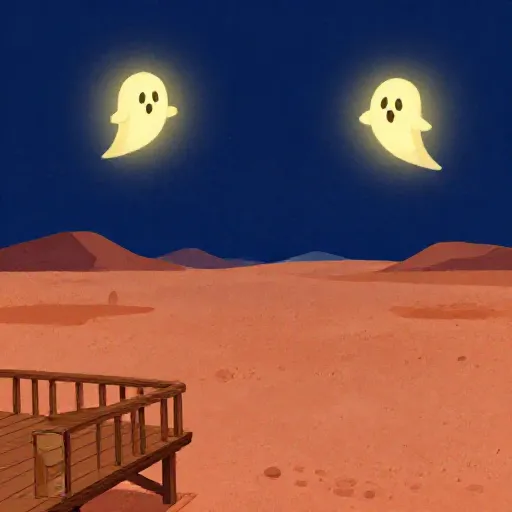
This story does not have a ghost in it. I want to be upfront about that. No woman in white. No rattling chains. No entity with a grudge and a backstory. This one has lights, and the lights do things that lights should not do, and nobody can explain them, and they have been at it for longer than anyone has been writing things down in Texas.
Marfa, Texas. Population: about two thousand, depending on who is in town for the art scene and who drove to Alpine for groceries. The Chihuahuan Desert. Flat and dry and so big that the horizon bends. At night the sky holds more stars than you have ever seen in your life, stacked so deep it feels like the ceiling is pressing down.
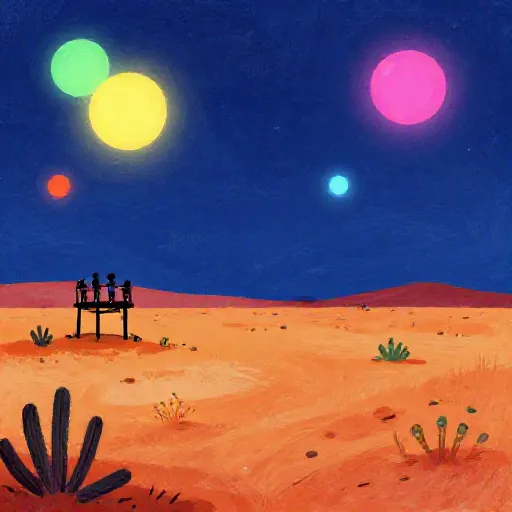
The lights appear east of town. On the Mitchell Flat. On their own schedule. Following their own logic. They bob and drift and split apart like cells dividing under a microscope. They come together again. They are the color of candlelight, or headlights through fog, or something burning at a distance your eyes cannot agree on.
There is a viewing platform on US Highway 67. Nine miles east of town. The Texas Department of Transportation built it. There is a plaque. The plaque says the lights have no explanation.
When the state builds you a plaque that says "we do not know," that is a different level of not knowing.
Stars That Came Down to Walk
The Apache knew this land long before anyone showed up with a surveyor's kit and opinions.
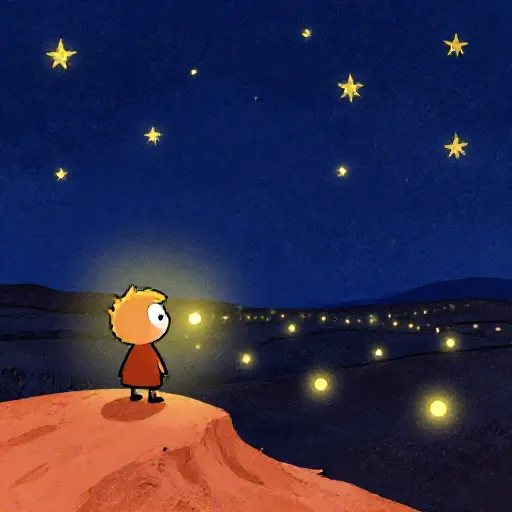
They said the lights were stars that had come down to walk. Not falling stars, which are broken and burning and on their way to being nothing. Stars that chose to descend. That stepped off whatever holds them up there and came down to move through the creosote and the dry grass and the rocks that hold the day's heat long after the sun has packed it in.
I like this explanation. I like it more than any of the scientific ones, and I will tell you why. It does not try to shrink the thing down to something comfortable. It puts it in a bigger frame. The lights are not malfunctioning. They are not confused. They are doing exactly what they came down here to do, for reasons that stars have and people do not get to ask about.
The Apache did not fear them. You do not fear something that has been walking through your country since before your grandparents' grandparents watched it from this same ridge. You notice it the way you notice weather. Something large and quiet passing through.
When the settlers arrived in the late 1800s, they were less comfortable with the concept of ambulatory stars. They wanted a different kind of answer.
They have been looking for one ever since. It has not gone great.
The Cowhand Who Thought They Were Campfires
The first time anyone wrote this down in English was 1883.
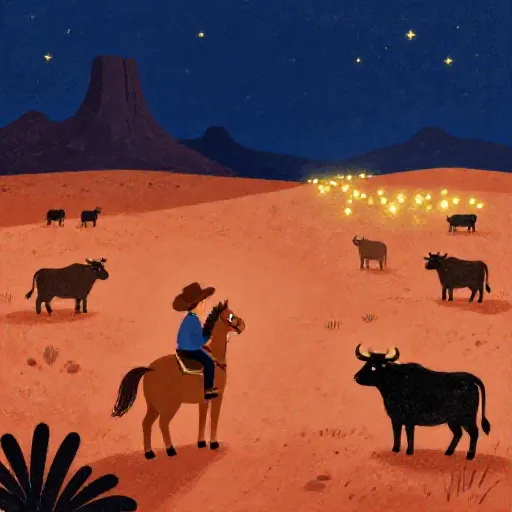
A cowhand named Robert Reed Ellison was driving cattle through the Mitchell Flat, east of the Chinati Mountains, at the hour when the desert goes from hot to cold so fast you can feel your skin tighten. He saw lights flickering in the distance. Warm. Amber. Low to the ground. He thought they were Apache campfires.
Reasonable guess. Sensible man.
He mentioned it to other ranchers over coffee thick enough to stand a spoon in. They had seen them too. Also thought campfires. Some of them had ridden out at first light to check. They found nothing. No ash ring. No charred wood. No footprints in the dirt. Just empty desert, blank and still, as if the ground itself had no memory of what happened on top of it the night before.
This became a pattern. See lights. Ride out at dawn. Find nothing. Pour more coffee. Repeat.
Ellison's account is the first written record, but it was almost certainly not the first sighting. It was just the first time someone picked up a pen instead of shrugging. Which is how most mysteries enter the historical record. Not because they start, but because someone finally gets tired of shrugging.
Over the next few decades, the lights became part of the landscape. Like the mountains. Like the silence. You lived there long enough, you stopped being surprised. The lights were just something the land did, the way some places have fog and others have rain and this one has things that glow for no reason anyone can name.
Cool. Normal. Love that for Marfa.
All the People Who Got Lost
When you have strange lights in an isolated place and winters long enough to wear the same story down to its bones, legends collect like dust in a corner.
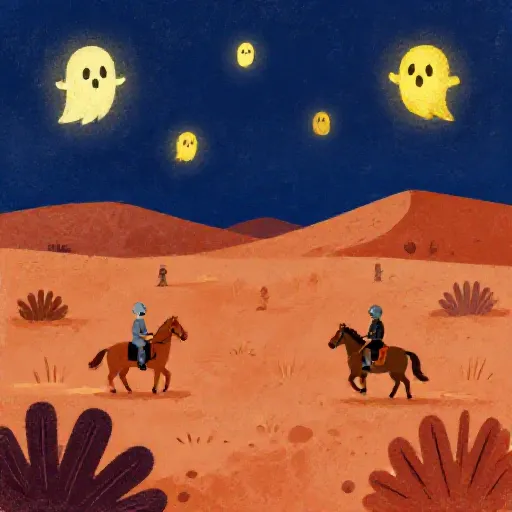
Spanish conquistadors, people said. Soldiers who marched into this country four hundred years ago with armor that flashed in the sun and mouths full of the word "silver." They never found their way out. Their lanterns still moving through the mesquite. Still searching for a mine, a road, a coast. Anything with an edge they could follow home.
Apache warriors killed in the conflicts of the 1800s. Still riding the territory they had bled to defend. The lights moving low and steady, the way a horse moves when it knows the ground.
Ranchers found dead in the scrub, far from their horses, with no mark on them and no story to tell. People who walked into the desert one evening for reasons that made sense to them and to nobody else. People who simply did not come back.
Every legend has the same shape: something was lost here. Something got stuck. Something has not stopped moving because it has not found what it was looking for.
The desert is like that. It does not return things. It keeps them. It lets them wander.
This is the part where you pull the blanket up a little. Go ahead. I will wait. I am not in a hurry.
The Scientists Who Tried
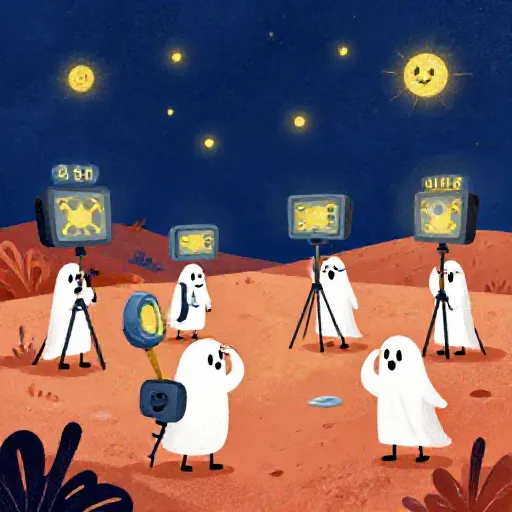
Scientists have been studying the Marfa Lights since the 1970s. Geologists. Atmospheric physicists. Optical engineers with equipment that costs more than the viewing platform they set it up on. The kinds of people who are very good at explaining things and very uncomfortable when they cannot.
In 2004, a team from the University of Texas published a study. Their idea: car headlights on Highway 67 create a mirage effect when the air temperature does specific, layered, particular things. The mirages look like floating lights. The math works. The models are clean.
This explains some of what people see.
It does not explain all of it.
It does not explain the sightings from the 1880s, which happened before cars existed. That is a pretty big hole in the "car headlight" theory. That is like saying thunder is caused by airplanes and then someone points out that thunder has been around since before the Wright Brothers.
It does not explain the lights documented on nights when no vehicles were on the highway, because the researchers closed the road and checked. It does not explain the lights that split apart, change color from amber to blue to white, and move in slow deliberate patterns that no headlight mirage has ever replicated.
The scientists who have spent the most time out there tend to say the same thing, carefully, the way scientists say things when the data has not cooperated: "There is something in that desert, and we have not fully accounted for it."
Which is a very polite way of saying they do not know.
I respect that, actually. "We do not know" is the most honest sentence in science. Most people cannot say it.
The Viewing Platform Is Open Every Night
People come from everywhere now.
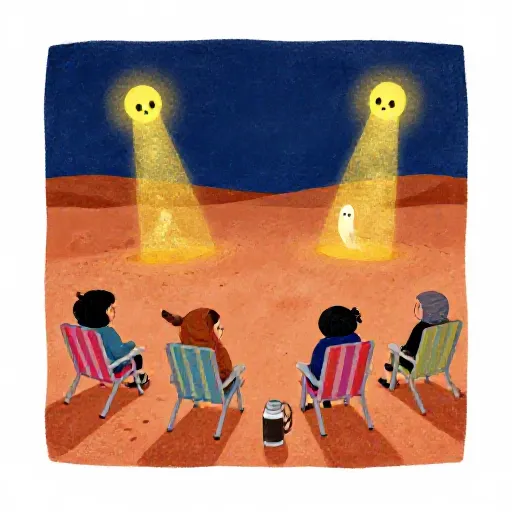
They set up lawn chairs and telephoto lenses and thermoses of coffee and the particular kind of hope that makes a person drive to West Texas to stare at nothing until something happens. The desert cold is a specific kind of cold. Thinner. Drier. The kind that finds the gap between your collar and your neck and moves in like it is paying rent.
Some nights nothing happens. The desert holds still and dark and enormous, and the watchers pack up with stiff backs and cold fingers and nothing to show for it. Some nights the lights come, and the people who see them get very quiet. The kind of quiet you only get when you see something you will be thinking about for a long time.
The lights, when they come, do not perform. They do not drift closer when you call. They do not respond to flashlights aimed at them or shouts sent into the dark. They move in their own slow way, by their own ancient logic, through country that has held them for as long as anyone has been watching. They have the energy of a cat that knows you are looking at it and does not care.
Apache warriors. Lost conquistadors. Ranchers still looking for the path back. Or stars, come down to walk, for reasons that are not ours to know.
The desert east of Marfa holds very still. The lights appear when they appear. They do not explain themselves.
Neither do most interesting things, if you think about it.
Close your eyes. The lights will be there tomorrow. Probably.
The True History
The part where we tell you what actually happened.
The Marfa Lights are a documented phenomenon in the Chihuahuan Desert near Marfa, Texas, in Presidio County. They have been observed continuously since at least the 1880s and are well-attested in newspaper accounts, scientific literature, and oral history. The Mitchell Flat viewing area on US Highway 67 east of Marfa is a permanent public installation maintained by the Texas Department of Transportation, and the lights are referenced in official state tourism materials. Multiple scientific investigations have been conducted, including a study by the Society of Physics Students and a more extensive University of Texas analysis in the early 2000s. None has produced a complete and universally accepted explanation. The 2004 UT Dallas study proposing a headlight mirage hypothesis, conducted by atmospheric scientist Karl Stephan and colleagues, received significant media attention and is frequently cited as a "solution" to the mystery. Stephan himself was careful in the paper's language, noting that the mirage hypothesis explained a subset of observations and that other observed characteristics of the lights remained outside the model's scope. The pre-automotive sightings documented by Robert Reed Ellison and others in the 1880s and 1890s are well-established in local historical record and present a direct challenge to any automobile-based explanation. Apache oral traditions regarding lights in the Chihuahuan Desert are not extensively documented in the academic literature, as much of this knowledge was transmitted orally and disrupted by the displacement of Apache communities in the late nineteenth century. Accounts of the Apache relationship to the lights have been collected by regional historians and journalists but should be understood as partial and mediated. The cultural geography of the area includes documented Apache presence stretching back centuries, and the Mitchell Flat region was within territory contested in the conflicts of the 1870s and 1880s. The lights have been observed in the same general area, consistently, across the entire span of documented observation.