A Queen in a Box Meant for Arrows
Okay. So. England. 1536.
Anne Boleyn was the Queen. Not the first wife. The second. Henry VIII had divorced the first one to get to Anne, and when I say 'divorced' I mean he literally broke with the Catholic Church and started his own religion so he could marry her. He rearranged the entire religious infrastructure of England because he wanted this specific woman. That is a level of commitment that should, in theory, mean something.
It did not mean something.
Three years later he needed her gone. She had not given him a son. She had given him Elizabeth, who would turn out to be one of the greatest monarchs England would ever produce, but that was not what he ordered. He ordered a boy.
So they charged her with adultery. Six men named. The evidence was so thin that some of the people reading the charges could not quite meet her eyes while they read them, which tells you everything you need to know about the evidence.
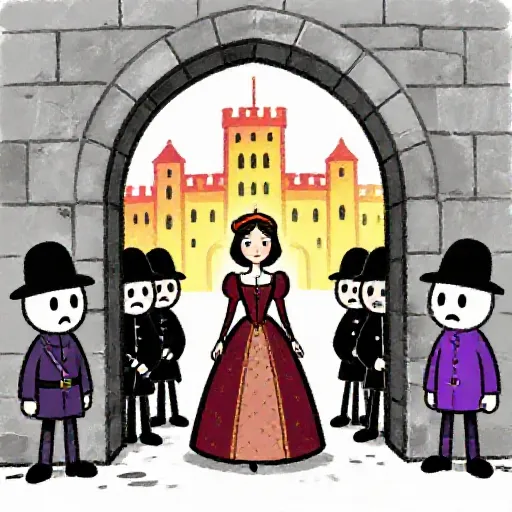
She was taken to the Tower of London by barge, on the Thames, through Traitor's Gate. She had been there before. Three years earlier. For her coronation. Same building. Different door.
I need you to sit with that for a second. The same building. The same woman. First time she walked in wearing a crown. Second time she walked in wearing shackles. The building did not change. She did not change. The man changed his mind.
She was about twenty-eight. Nobody kept exact records of her birth, which is a small detail that becomes a very large one when you are trying to calculate how young she was when they decided to kill her.
May 19th, 1536 (The Short Chapter)
They brought her to Tower Green on the morning of May 19th. The crowd was small. The sky was the color of old laundry.
She gave a speech. Short. Measured. Every word chosen the way you choose your footing on a narrow bridge when you can see the water below. She praised the king, because that was how it worked. Even with the sword waiting, you did not say the charges were fake. You did not scream. You did not make it difficult. You thanked the man who had signed your death warrant because manners mattered more than justice in 1536, which is a sentence I did not enjoy writing.
The swordsman was French. Brought from Calais specifically for this. A sword instead of an axe was considered a kindness. I want you to think about a world where the type of blade is the kindness. That is the world she lived in.
She knelt upright. No block. Neck bare. Hair pinned up so it would not get in the way. She arranged herself the way you arrange yourself when you have decided to handle this with more dignity than anyone in the room deserves.
The blow was clean. One stroke. The French were apparently good at this.
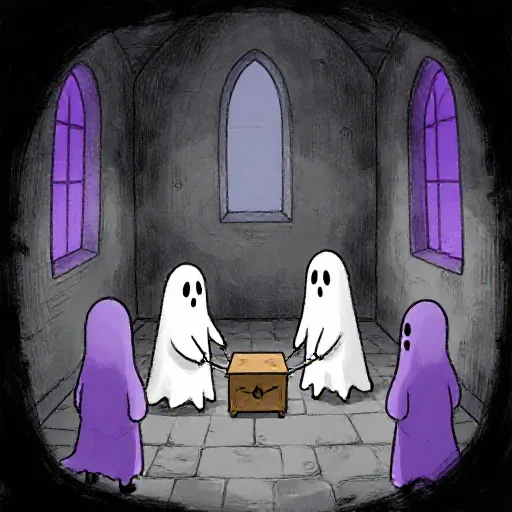
They buried her that afternoon. In the Chapel of St. Peter ad Vincula, inside the Tower walls. In an arrow chest. Because nobody had thought to prepare a coffin for the Queen of England. They put her head beside her body, wrapped the lid shut, and slid her under the floor.
No marker. No ceremony. No name.
Three hundred years of silence on top of her. That is a long time to leave someone without their name. Remember that. It becomes important later.
The Guards Start Noticing (Before the Century Is Even Over)
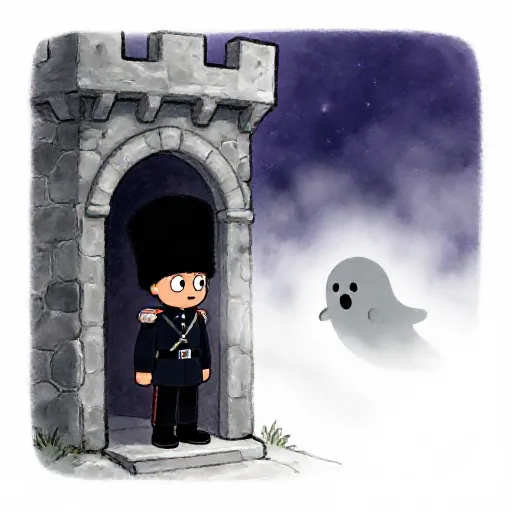
The Tower of London has been garrisoned continuously since 1066. That is nearly a thousand years of soldiers standing watch through the night, in fog that rolls off the Thames like something poured from a bowl, in the particular cold of stone buildings that have never once in their entire existence been warm.
They started seeing her in the late 1500s. Before the century that killed her was even over.
That is fast. Most ghosts wait at least a hundred years. She apparently had places to be.
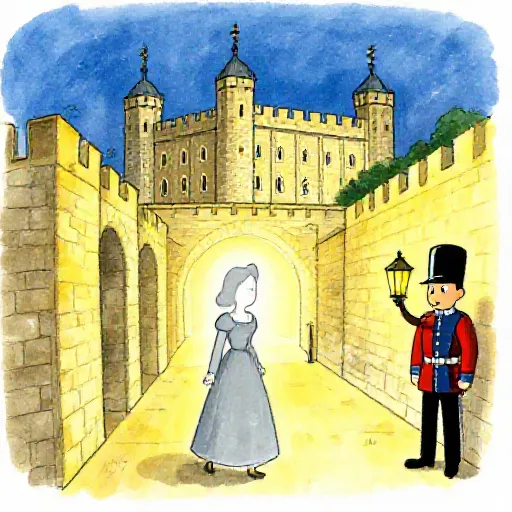
A woman in grey. Moving along the inner walls near the chapel. Sometimes near the Bloody Tower, near the room where she spent her last weeks alive. Moving slowly, silently, with the careful attention of someone looking at every stone like she is trying to remember whether it was always there.
The reports are the same across four hundred years of garrison records. Grey dress. Dark hair. Slight figure. No sound. No shadow. Sometimes she carries her head, which is noted in the records with the same flat, factual tone as everything else, and I think about that a lot. Imagine being the type of person who writes 'the apparition was carrying its head' the same way you would write 'the weather was overcast.' That is what it is like to be a Tower guard. You develop a very specific relationship with normal.
The men who see her do not report it right away. They wait. They think about it. Then they mention it quietly, almost as a question.
The officers nod. They have heard it before.
The Tower has a very long memory. And it repeats itself on a schedule that nobody has ever been able to predict.

The Guard Who Tried a Bayonet (It Did Not Work)
There is one sighting in the official military record. The actual, filed, stamped, someone-got-court-martialed-over-this military record. This is unusual because the British Army does not typically include ghosts in its paperwork.
On a cold night in 1864, a sentry was standing his post near the Lieutenant's Lodgings. The fog was thick enough that the nearest wall was more of a suggestion than a fact.
A figure in white came toward him out of the fog.
He challenged her. Halt. Identify yourself. She did not stop. She did not slow down. She moved through the fog with the steady, unhurried walk of someone who knows exactly where they are going and does not require permission from a man with a bayonet. Which is fair. She was a queen. He was on a night shift.
He fixed his bayonet. He drove it forward with the full weight of his body.
The blade went through her the way a hand goes through smoke.
I need you to think about that sensation for a second. You are a trained soldier. You have committed your entire body weight to a thrust. You are expecting resistance. You are expecting to hit something. And instead there is nothing. The steel passes through the space where a body should be and meets air, and the absence of what you expected is so wrong that it travels up the rifle and into your arms and your legs and you drop.
He was found unconscious on the stones. Court-martialed for abandoning his post.
Two other guards testified they had seen the figure from a distance. The charge was reduced. The official record contains the full account. Nobody at the hearing offered an explanation.
The bayonet was in perfect condition. Cool. Great. Love that for the bayonet.
What She Does and What She Does Not Do
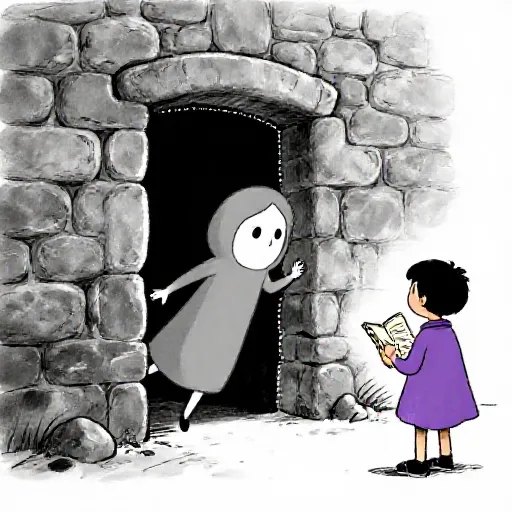
She does not speak. This is noted every single time, across every account, in every century. Four hundred years and not a word.
Some of the Tower's other ghosts whisper. Some weep. Some say fragments of sentences that trail off into the cold air like breath on a winter morning. Anne Boleyn says nothing.
And here is the part that really gets me.
She moves through walls. Without breaking stride. As if the walls are a recent addition to a place she knew when it was laid out differently. And they might be. The Tower has been rebuilt and renovated dozens of times since 1536. The corridors she knew are not the corridors that are there now.
She walks the old ones. The ones that do not exist anymore. She walks through walls because she is walking through doorways that were there when she was alive and have since been bricked up by people who did not know they were closing a door she was still using.
That is the detail I cannot get past. She is not walking through walls. She is walking through doors. We just cannot see them anymore.
She is seen most often on May 19th. The anniversary. But she has also been seen in June. In October. In February, in the deep cold, moving along the outer wall in the grey dawn when the Thames is flat and the birds have not started and the Tower is as close to silent as it ever gets.
She appears to be looking for something.
She has had nearly five hundred years to look.
She has not found it.
The Chapel Floor (The Part Where They Gave Her Name Back)
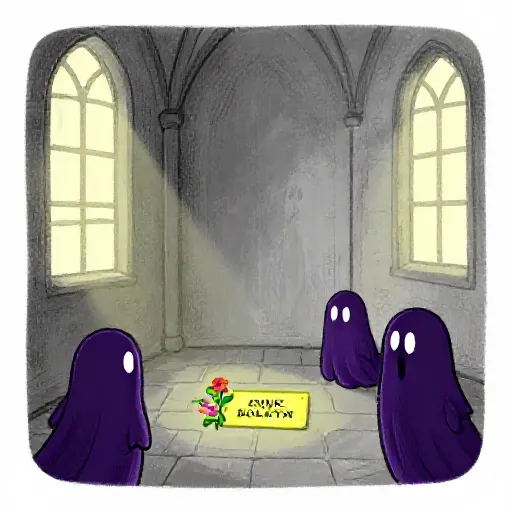
The Chapel of St. Peter ad Vincula stands inside the Tower walls. Small. Plain. Very old. The ceiling is low enough that the silence presses down on you like a hand on your shoulder.
Anne Boleyn is buried under that floor. Her cousin Catherine Howard, also beheaded, lies a few feet away. Thomas More is there. Jane Boleyn. Others whose names have faded from memory but who died the same way, in the same place, on the same stretch of green.
In the 1870s, during renovations ordered by Queen Victoria, workers opened the floor and the graves were properly identified for the first time. A plaque was laid. Names were given back to people who had been buried without them.
Three hundred and forty years. That is how long she waited for someone to write her name on the floor above her. Three hundred and forty years in an arrow box with no marker.
She had carved her own name, by the way. Well. Sort of. During her imprisonment, she scratched 'AB' into the stone wall of the Tower. You can still see it. Two letters. That is all she got to leave.
Visitors to the chapel say it has a particular stillness. Not the theatrical kind you get on ghost tours. The real kind. The kind a room gets when it has absorbed more history than any room should have to.
The Grey Lady is seen most often on the path between the chapel and the Bloody Tower. If you are standing on that path at dusk, you will not hear footsteps. You will not hear fabric. You will not hear anything at all.
The cold will arrive first. Settling onto your neck and the backs of your hands like something that just noticed you were there.
That is how you will know.
She was twenty-eight. She was a queen. They put her in a box meant for arrows and did not write her name down for three hundred and forty years.
Good for her, honestly, for not leaving.
Now go to sleep.
The True History
The part where we tell you what actually happened.
Anne Boleyn was Queen of England from 1533 to 1536, the second wife of Henry VIII and mother of the future Queen Elizabeth I. She was arrested on charges of adultery, incest, and high treason in May 1536 and executed on Tower Green on May 19th of that year. Modern historians regard the charges as almost certainly fabricated; the most likely motivation was Henry's desire to remarry and produce a male heir, combined with Anne's growing political enemies at court. The men executed alongside her, including her own brother, were almost certainly innocent. She was buried in the Chapel of St. Peter ad Vincula inside the Tower of London, initially without proper ceremony or a marked grave. In 1876, Queen Victoria ordered an investigation of the burials beneath the chapel floor, and a skeleton identified as Anne's was placed in a proper coffin and reinterred with a marked tile. The identification was based on skeletal features consistent with historical descriptions. The 1864 court martial of a sentry for encountering what witnesses described as Anne Boleyn's ghost is one of the more unusual documents in the Tower's administrative records. It is cited in multiple serious historical accounts of the Tower's history. The Tower of London, now managed by Historic Royal Palaces, receives approximately three million visitors per year. Ghost tours operate regularly. Yeoman Warders, the Tower's resident guards, are known to tell visitors: of all the ghosts reported in the Tower's history, Anne Boleyn is seen most often.