The Girl on the Road
All right. You have heard this one. I know you have heard this one. Everyone has heard this one. Your uncle told it at a barbecue in 1997 and acted like it happened to a friend of his, and it did not happen to a friend of his, but that does not matter. This story is older than your uncle. It is older than barbecues. It might be older than roads.
Here is how it goes.
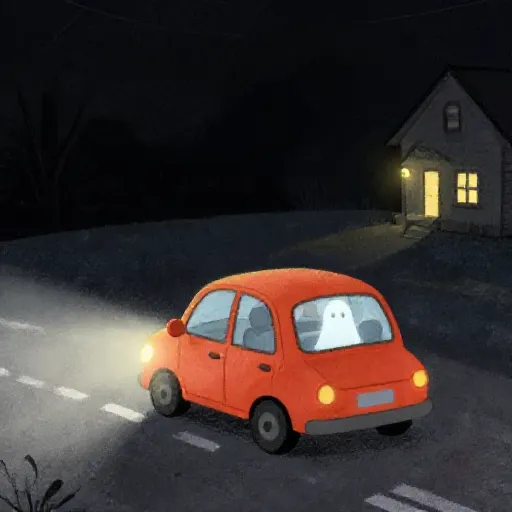
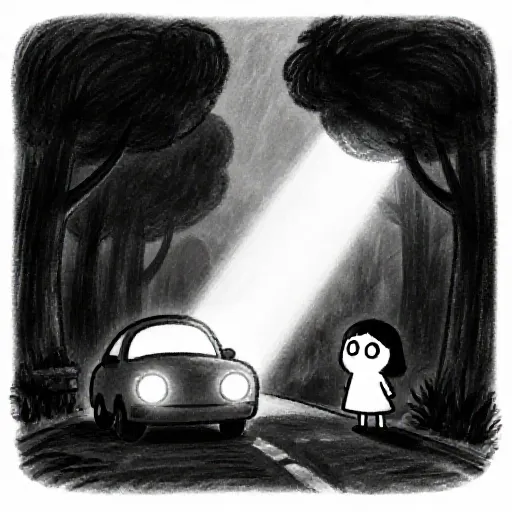
A man is driving at night. Two lanes. No shoulder. The kind of road where the trees are so close their branches scrape the roof if you drift, and the road does not forgive drifting. His headlights carve out maybe forty feet of asphalt and the dark swallows the rest.
Then the headlights find her.
A young woman. Standing at the gravel edge with her thumb out and her other arm wrapped around herself. White dress. Thin fabric. The kind of dress that belongs to a different decade, but you do not think about that at midnight on a road that smells like pine sap and wet dirt and nothing else for miles.
He pulls over. Of course he does. You cannot leave a person standing on a road like that. Not at that hour. Not wearing that little.
He told himself later he would have stopped for anyone. People always say that. It is never entirely true.
She Got in the Back
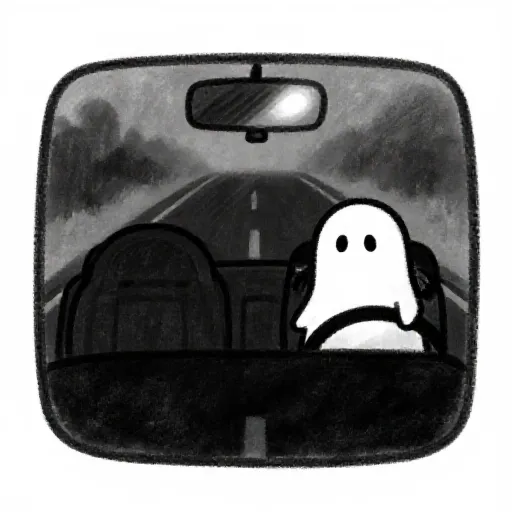
She opened the back door. Not the front.
That is the choice you make when you want a ride but not a conversation. The dome light clicked on for a second and he saw her face. Young. Calm. Pretty in a way that was hard to hold onto afterward, like trying to remember the exact color of something you saw underwater.
She gave him an address. A house number, a road name, a few miles north. She said it the way you say your own address: without thinking. The words worn smooth from use. Like a phone number you have dialed so many times your fingers do it without your brain.
Then she went quiet.
He tried the small talk. The weather. The late hour. All the little coins of conversation you offer a stranger in your car at midnight, knowing they will not fit the slot. She answered in single words. Polite. But somewhere else entirely.
The heater hummed. The radio played something neither of them would remember. The trees kept pressing in from both sides like a hallway getting narrower. After a few miles he stopped trying and just drove.
The silence was not uncomfortable. It was the silence of someone who did not need anything from him except the ride. She sat in the back and watched the dark roll past the window the way you watch scenery you already know by heart.
Which, as it turns out, she did.
The Empty Back Seat
He pulled into the gravel driveway. The tires crunched and popped the way gravel does when it is the only sound for a mile.
He turned off the engine. Turned around to tell her they had arrived.
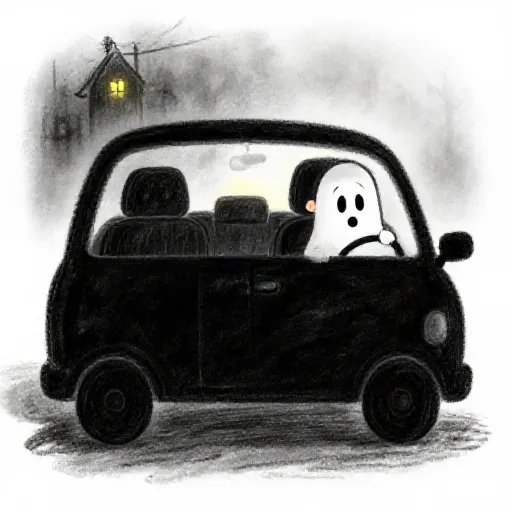
The back seat was empty.
Not empty the way a seat is empty when someone has just left. No warmth. No wrinkle in the upholstery. No lingering smell of perfume or cold air or anything human. The door was latched shut. It had never opened. He would have heard it. You hear a car door open. That is not a subtle sound.
She was there. And then the space where she had been was just space again. Like a word erased so cleanly you cannot tell something was written there.
I want you to sit with that for a second. You are in a car. At night. In a driveway you have never been in. The person who was sitting behind you three minutes ago has stopped existing without opening a door.
What do you do?
I will tell you what this guy did. He sat there while the engine ticked as it cooled. Then he got out. Walked up the porch steps. The wood was soft and grey under his shoes, the kind of wood that has been rained on for decades and stopped caring about it.
He knocked on the door.
That is the bravest thing anyone has ever done in a ghost story. His passenger just vanished from a closed car and his move is to go knock on the house she pointed him to. This man has the survival instincts of a golden retriever.
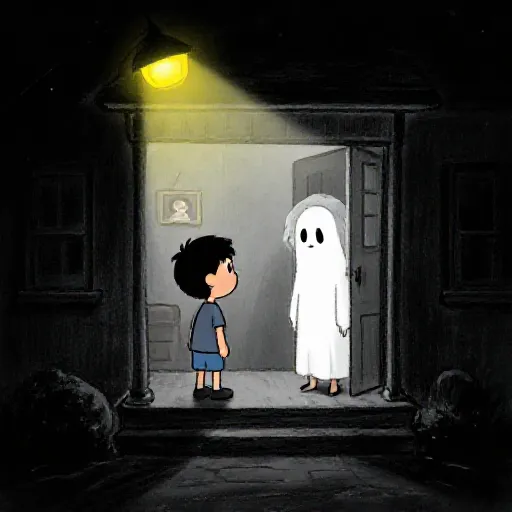
The Woman Who Already Knew
A light came on upstairs. Then the hallway. Then the porch light, yellow and tired, like a bulb that has done this too many times.
The door opened on an older woman in a bathrobe who looked at him the way you look at a stranger on your porch after midnight. Which is to say: carefully. With one hand on the door frame.
He described the girl. The white dress. The address she had given. The way she had vanished from his back seat without the door ever opening.
The woman was quiet for a long time.
Not surprised. That is the part that got him. She was not surprised. She was quiet the way a person is quiet when they are hearing something for the hundredth time and it has not gotten easier.
That was her daughter.
The white dress was the one they buried her in. She died on that road. Coming home. On this date. Years ago. And every year on the anniversary, someone pulls into this driveway with the same story. Different car. Different driver. Same girl. Same dress. Same address spoken in that quiet, practiced voice.
Every. Single. Year.
This woman answers the door on the worst night of her life, annually, and listens to a stranger describe her dead daughter getting into their car, and she thanks them. She thanks them for stopping. She says her daughter was always the kind of person who found a way to get where she was going.
That is the toughest person in this story. Not the driver. Not the girl. The mother, opening that door every year, already knowing what she is about to hear.
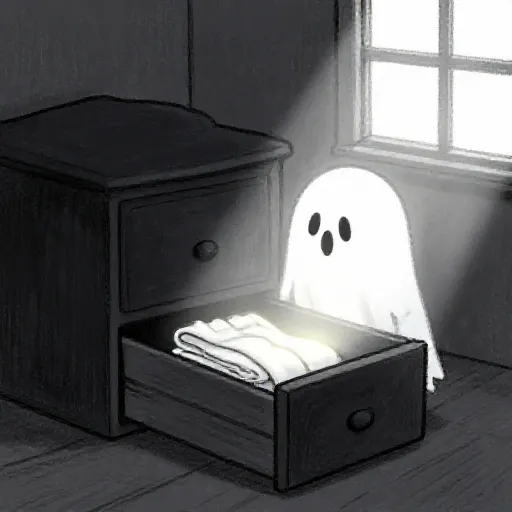
The Scarf in the Drawer
He walked back to his car. On the back seat, folded neatly, was a scarf.
Left the way you leave something when you plan to come back for it.
He kept it. What else are you going to do? Return it? To whom? Drive back to the house and say "your dead daughter left this in my car"? Put it in a lost and found box at a gas station? Throw it away? No. You do not throw it away. It will not let you. It sits in your hand and it is real and it is soft and it should not exist.
So the scarf rode around in the back seat for a while. Then the glove compartment. Then one day he brought it inside and put it in a drawer. The top one. Where you keep the things that do not have a category.
He told the story to a few people. His brother. A friend from work. Some believed him. Some made the face. You know the face. The one that says "I think you had a long drive and not enough coffee."
But the scarf was in the drawer.
That was always the part that stopped the conversation. You can talk yourself out of seeing a girl on a dark road. Headlights and loneliness and a long shift do strange things to a tired brain. Sure. Fine. But the scarf was in the drawer. You could touch it. It was soft and real and it smelled faintly of something floral that no one could quite name.
It should not have been there. That was the whole problem. Everything else you can explain. The scarf, you cannot.
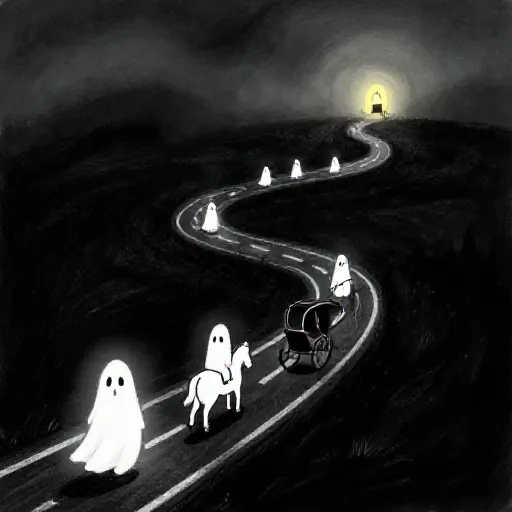
Every Road Has One
Here is the thing. This story is not American.
I mean, it is. This version is. But the same story has been collected in England and Japan and Korea and Scandinavia and places where the roads are dirt and the rides are on horseback. The shape is always the same. Dark road. Quiet stranger. An address given calmly. The vehicle empty on arrival. The person at the door with the old, old sorrow.
In some versions it is a coat left behind. In others a book, a ring, a set of keys still warm from a hand. Always something solid. Always something that insists on being real in a story that should not be.
The folklorist Jan Harold Brunvand found seventy-nine distinct versions. Seventy-nine. That is not a round number. That is the number of someone who has done the counting.
The oldest versions are from before cars existed. Horse and buggy. Rickshaw. On foot. The technology changes. The story does not. A dead person gets a ride home. Someone finds something solid in a place where nothing solid should be.
Every culture, on every continent, tells some version of the same thing: the dead still travel. They remember the way home. Somewhere on a road you have driven a hundred times in daylight and never thought twice about, someone is still trying to get back to the place where the porch light is on.
The scarf is in a drawer somewhere. It smells faintly of something you almost recognize.
Probably nothing. Go to sleep.
The True History
The part where we tell you what actually happened.
The Vanishing Hitchhiker is one of the most widely documented urban legends in the world, studied extensively by folklorists as an example of a "migratory legend," a story that travels across cultures and centuries while preserving its essential structure. The American folklorist Jan Harold Brunvand, who popularized the term "urban legend," dedicated significant analysis to the story in his 1981 book "The Vanishing Hitchhiker: American Urban Legends and Their Meanings." Brunvand found over 79 distinct versions of the story collected by scholars, spanning multiple continents and dating back at least to the 1870s, long before automobiles existed, when the traveler arrived by horse and wagon. The earliest versions are not American in origin. A Japanese variant involving a pregnant woman picked up by a rickshaw driver appears in Edo-period records. A Korean version describes a young woman visiting her home village after death. In the American tradition, the story crystallized in its current form during the early automobile era, approximately the 1930s, when hitchhiking was common and the combination of empty roads, strangers, and uncertainty made the scenario plausible to a wide audience. Specific real roads and real accidents have frequently been attached to local variants, giving the story geographical specificity that makes it feel like documentation rather than legend. The "forgotten object" detail, the coat, scarf, or item left behind as physical evidence, is considered by folklorists to be a narrative anchor: it answers the objection that the driver simply imagined or hallucinated the passenger. The object is the proof. It cannot be explained away. Brunvand notes that this element appears across virtually all versions of the story in all cultures, suggesting that whatever deeper need the story serves, it requires physical evidence. The audience needs something that cannot be put back in the box.