A Very Promising Marriage
Okay. West Virginia. 1896.
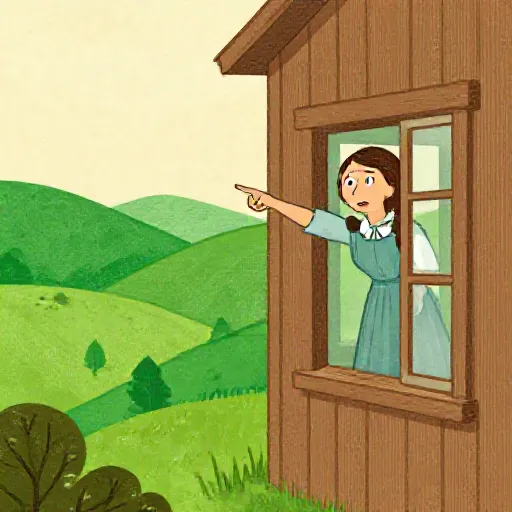
There is a young woman named Zona Heaster, christened Elva Zona Heaster though nobody called her that. She lives near Livesay's Mill in Greenbrier County, which is beautiful in the way that places are beautiful when they also have a lot of trees and not a lot of options. She is twenty-three years old. She is, by all accounts, doing fine.
Then she meets Edward Shue.
Edward Shue, full name Erasmus Stribbling Trout Shue though everyone just called him Trout, has recently arrived in Greenbrier County. He works as a blacksmith. He is new. He is charming. He has a good jaw. These are, historically, the three warning signs that nobody listens to.
He is also, though Zona does not know this yet, on his third marriage. His first wife, Allie Estelline Cutlip, divorced him in 1889, which in 1880s West Virginia was not a decision women made lightly or without a very good reason. His second wife, Lucy Ann Tritt, died in 1895. The coroner at the time called it sad and did not look very hard for a different word.
Zona's mother, Mary Jane Heaster, did not like Edward Shue. She said so clearly. She had the particular unease of a woman who has lived long enough to recognize a certain kind of man, and she told Zona as much.
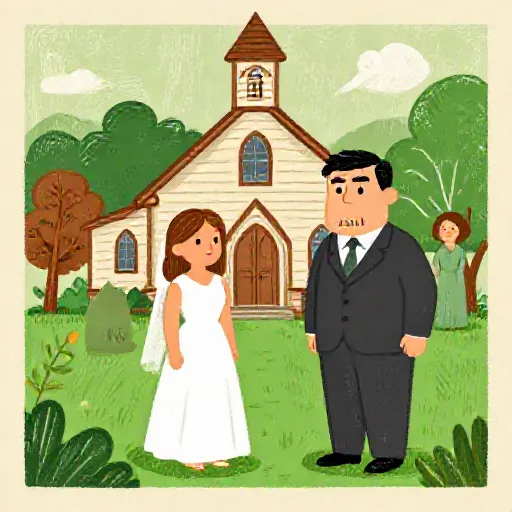
Zona married him in October 1896.
Mary Jane went to the wedding and smiled and probably cut her piece of cake very precisely.
The marriage lasted three months.
The Discovery
January 23, 1897.
A young boy named Andy Jones, eleven years old and entirely unprepared for what is about to happen to his Saturday morning, comes to the Shue house because Edward sent him to ask if Zona needed anything done around the place.
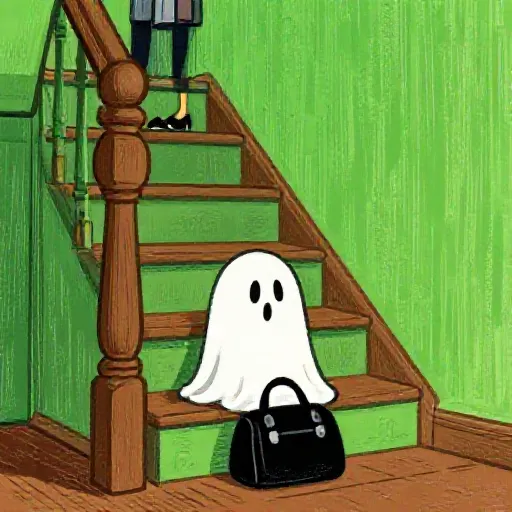
He finds Zona at the bottom of the stairs.
She is lying stretched out. Very still. Very neat. Which is one of those details that sounds almost comforting until you think about it for a moment.
Andy runs to get help. The local doctor, Dr. George Knapp, is called. Edward Shue arrives at the house before the doctor does. By the time Dr. Knapp gets there, Edward has already carried Zona upstairs, dressed her in her best clothes, and positioned her carefully on the bed.
Dr. Knapp begins his examination. Edward sits next to Zona on the bed and holds her. He is weeping. He is also, and the doctor will mention this later, doing a very specific thing with his hands: he keeps them near her neck. Constantly. Through an exam that by most later accounts lasted only a few minutes, Edward is already there, weeping, cradling, being in the way.
Dr. Knapp's first note called it 'everlasting faint.' He then revised his opinion toward 'female trouble.' Neither term meant much of anything medically, and he did not press very hard to find out what had actually happened.
Edward Shue buried his wife in a dress with a high collar and a stiff white veil tied around her neck. He said he wanted her to look special.
Mary Jane Heaster went home and washed the sheet that had been on Zona's pillow. The water turned red. She washed it again. It turned red again. She boiled the sheet. The water ran pink.
Four Nights
Mary Jane Heaster did not accept that her daughter died of female trouble.
She prayed. Every night for four weeks. She asked, specifically, for Zona to come back and tell her what happened. This is the part where most people would say 'well, you can certainly try.'
Zona came back.
Four nights. Four visits. Mary Jane was awake for all of them.
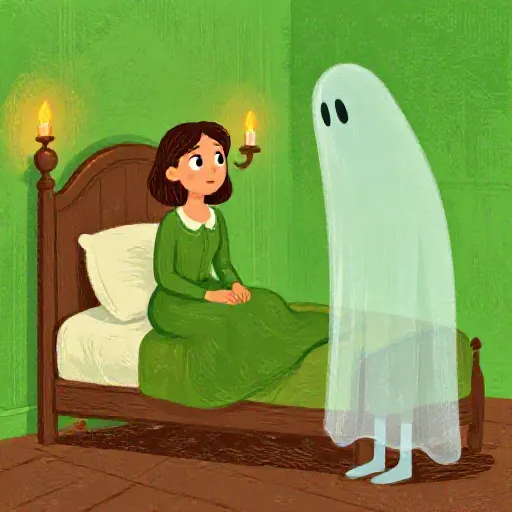
Zona came in through the bedroom door, which was closed. She stood at the foot of the bed. She looked, by her mother's account, quite well, which is something you could take either as comforting or as its own kind of unsettling depending on what you expected a ghost to look like.
On the first night, Zona told her mother that Edward had killed her.
On the second night, she described how: he had grabbed her neck and broken it. He had done this because supper was not ready when he expected it. This is the kind of reason that makes a certain amount of terrible sense once you understand what kind of man Edward Shue was.
On the third and fourth nights, Zona demonstrated. She turned her head completely around. She turned it slowly and with what Mary Jane later described as great patience, as if she understood this was a difficult thing to watch and wanted to be thorough.
Mary Jane did not scream. She did not run. She sat up in her bed and looked at her daughter's backward-facing head and listened to everything Zona had to say.
Every detail she gave that night would later appear, unchanged, in a sworn courtroom transcript.
Then she went to see the prosecutor.
Digging Up the Evidence
John Alfred Preston was the prosecuting attorney of Greenbrier County. He was a serious man with a serious job and a certain amount of skepticism about the testimony of ghosts.
He also, to his credit, was a man who looked at Mary Jane Heaster and understood that she was telling the truth as she experienced it, and that whether the ghost was real or not, the underlying question of how Zona Shue died was worth investigating properly, which nobody had actually done yet.
He requested an exhumation.
Edward Shue objected. Loudly. Repeatedly. He said it was disrespectful. He said it was unnecessary. He said Zona had died of natural causes and that disturbing her grave would serve no purpose and also, he added, there was nothing to find.
That last part was a strange thing to say.
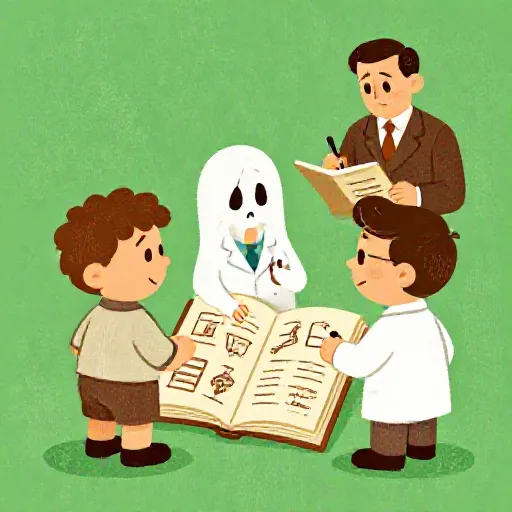
The exhumation happened on February 22, 1897, about a month after Zona's burial. Three doctors performed the autopsy in a local schoolhouse, since Greenbrier County had nowhere better suited to the job. They found: a broken neck. Specifically, the vertebrae at the top of the spine were dislocated. The windpipe had been crushed. The tissue showed bruising consistent with strangulation by hand.
Dr. Knapp, the original doctor, was present. He had previously written 'everlasting faint,' then 'female trouble,' in his notes. He looked at the findings and agreed that this was, in fact, neither.
Edward Shue was arrested. He said the whole thing was a conspiracy driven by a grieving mother who had been visited by a ghost, which: yes. That is exactly what happened. That is not the defense you think it is.
The Trial
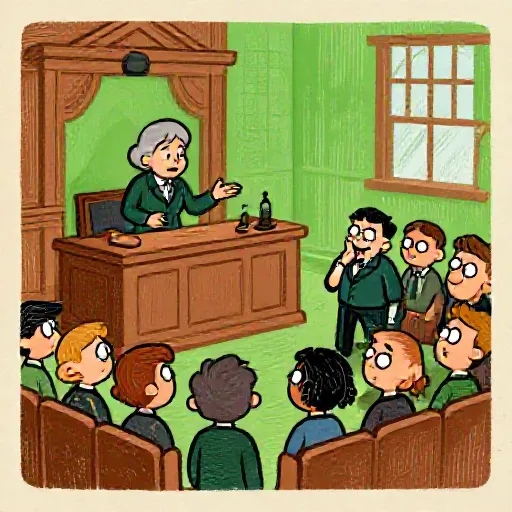
The trial of Edward Shue began in June 1897, in the county courthouse in Lewisburg, West Virginia.
The defense team included James P.D. Gardner, a formerly enslaved man who had become one of the first Black attorneys admitted to practice in Greenbrier County. His presence on the case, in a Reconstruction-era Southern courtroom defending a white man accused of murder, is itself a detail West Virginia legal historians return to.
The prosecution called witnesses. They called the doctors. They called Andy Jones, who was still eleven and still processing the events of that Saturday. They called neighbors who had noticed things about Edward's behavior. They called Mary Jane Heaster.
Mary Jane took the stand and told the court about the four nights. About the visits. About Zona standing at the foot of the bed and turning her head all the way around.
The defense made a strategic decision here. They cross-examined her. Aggressively. They tried to get her to admit she had imagined it, or dreamed it, or was driven by grief to hallucinate her daughter.
Mary Jane did not budge.
She said: my daughter came to me. She said: I know what I saw. She said it with the particular certainty of a woman who has had four nights to think about it and has decided what the truth is.
The defense was trying to discredit the ghost testimony. What it accidentally did was put it in front of the jury, clearly and repeatedly, so that every juror heard about the backward-turning head at least three or four times.
This is not considered, in legal history, a well-executed cross-examination.
The jury heard everything. The medical evidence. The prior wives. The collar and the veil and the hands near the neck and the very strange thing Edward said when they arrested him, which was: 'they cannot prove that I did it.'
Not 'I did not do it.' Not 'she died naturally.' He said: they cannot prove it.
They proved it.
The Verdict
The jury deliberated for one hour and ten minutes.
They found Edward Shue guilty of murder in the first degree.
Outside the courthouse, a crowd formed that had already decided on a harsher sentence than the jury had. Newspaper accounts from the time describe a mob gathering with the intention of lynching Shue before he could be moved to prison. He was taken out under guard before anything came of it, the closest this story gets to a second miscarriage of justice being narrowly avoided.
He was sentenced to life in prison. There was some discussion of the death penalty. The jury had apparently decided that life imprisonment was the appropriate punishment, and also possibly that they had seen enough death for one trial.
Edward Shue went to the West Virginia Penitentiary at Moundsville. He maintained his innocence. He died there on March 13, 1900, during an epidemic that swept through the prison population. He was thirty-six years old, three years into a life sentence he did not get to finish serving in any other sense.
The case is documented in West Virginia legal history as the only known case in American jurisprudence where testimony about a ghost is tied to a murder conviction. The attorneys never officially argued the ghost was real. But the ghost's testimony matched the physical evidence. The neck was broken exactly where Zona said it was broken.
Mary Jane Heaster lived until 1916. She never changed her account. She was asked about it many times over the years and she always said the same thing: Zona came to her. Zona told her what happened. Zona turned her head around so her mother would understand.
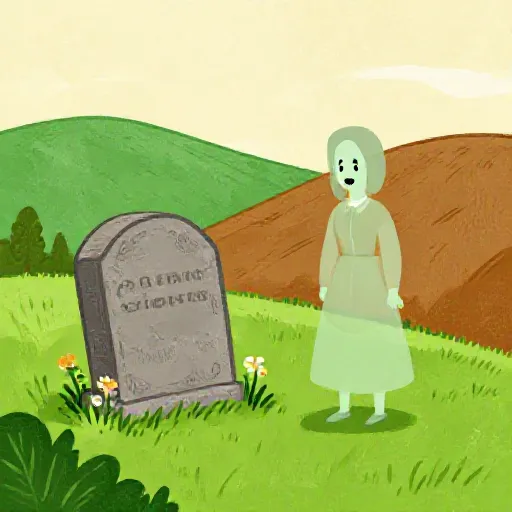
Zona is buried in Greenbrier County. Her grave marker, installed with support from the West Virginia Division of Culture and History, reads: 'Interred in the nearby cemetery is Zona Heaster Shue. Her death in 1897 was reported as natural causes. However, her spirit appeared to her mother to describe how she was killed by her husband Edward Shue. As a result, he was tried, convicted and sentenced to the state prison. Only known case in which the testimony of a ghost helped convict a murderer.'
Someone paid to have that put on a grave marker. Officially. With a budget.
Good for them.

Believe It or Not
The case did not stay in Greenbrier County.
Decades later, Robert Ripley's Believe It or Not syndicated column carried the story nationally, describing Zona Heaster Shue's case as the only one in American legal history in which testimony about a ghost helped convict a murderer. No court ever formally admitted a ghost as a witness, but the claim stuck, and it is more or less the version that ended up carved into limestone.
In 1982, West Virginia writer Katie Letcher Lyle published The Man Who Wanted Seven Wives, the first book-length account of the case built from trial transcripts, 1897 newspaper coverage, and county records. It remains the most thorough nonfiction treatment of what actually happened, as opposed to what the grave marker implies happened, which are related but not identical stories.
The distinction matters and also does not matter. What convicted Edward Shue was a dislocated vertebra, a crushed windpipe, and a prosecutor willing to order an exhumation because a grieving woman would not stop insisting something was wrong. What everyone remembers is the part where her daughter came back to tell her so.
Both things happened. Greenbrier County has never seen a reason to pick one.
The True History
The part where we tell you what actually happened.
Zona Heaster Shue died January 23, 1897, in Greenbrier County, West Virginia. Dr. George Knapp first recorded her cause of death as "everlasting faint," then revised it toward "female trouble"; an exhumation on February 22, 1897, found her neck broken and her windpipe crushed.
Edward Shue, whose full legal name was Erasmus Stribbling Trout Shue, married Zona in October 1896. He had two previous wives: Allie Estelline Cutlip, who divorced him in 1889, and Lucy Ann Tritt, who died in 1895 under circumstances that were never investigated at the time.
Mary Jane Heaster's testimony that Zona's ghost visited her four times and described the murder is preserved in the official trial record; legal historians note that the defense's aggressive cross-examination on this point likely reinforced it in the jury's mind rather than discrediting it.
Shue's defense team included James P.D. Gardner, a formerly enslaved man who became one of the first Black attorneys to practice law in Greenbrier County, a detail documented in West Virginia legal history.
The jury convicted Shue of first-degree murder in June 1897 after a little over an hour of deliberation. He was sentenced to life at the West Virginia Penitentiary in Moundsville and died there in 1900.
Zona's grave marker, installed with support from the West Virginia Division of Culture and History, states the case is the only known one in which testimony about a ghost helped convict a murderer, a claim later repeated by Ripley's Believe It or Not and examined in detail in Katie Letcher Lyle's 1982 book The Man Who Wanted Seven Wives.
More Ghost Stories
Since you made it this far.